
Publications
- Empathy and Fundamental Frequency Convergence
Authors: Camilo Quezada, Juan-Pablo Robledo del Canto, D. Román, Carlos Cornejo.
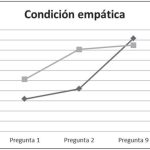
Abstract: This study examined the relationship between empathy and phonetic convergence. The working hypothesis was that empathy between two individuals translates into a synchronous process that affects pitch values. To test this, 27 dyadic interactions were recorded and assigned to one of two experimental conditions (Empathic and Non-Empathic). The temporal evolution of pitch was tracked in selected questions used to guide the conversations. In each interaction, pitch was analyzed for both participants to determine whether phonetic convergence occurred. Descriptive and inferential analyses were conducted, and the results were consistent with the manipulation designed to differentiate the two experimental conditions. Overall, the findings support the existence of a relationship between certain phonetic features of speech and dispositional dimensions that, while typically overlooked by classical models of cognition, are pervasive in everyday interaction. The data also suggest that the effect of empathy is stronger in mixed-gender dyads than in same-gender dyads.
- Sequential remembering and lived remembering in the course of experience: a videographic study

Authors: Himmbler Olivares, Paloma Opazo, Daniela Sepúlveda Moreno, Carlos Cornejo
Abstract: Over the last 30 years, discussions of memory and remembering have evolved from a strictly cognitive perspective toward a broader view that incorporates the body into these processes. In this context, the present article seeks to revisit Henri Bergson’s main ideas—published more than a century ago—highlighting the close relationship between immediate experience, memory, and bodily movement. First, contemporary perspectives on memory are reviewed. Next, findings from a videographic study are presented, showing how deeply the body is involved in the act of remembering. These results point to two distinct modes of remembering: sequential remembering and lived remembering.
- Spontaneous bodily coordination varies across affective and intellectual child-adult interactions
Authors: Zamara Cuadros,Esteban Hurtado, Carlos Cornejo
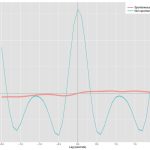
Abstract: Infant-adult synchrony has been reported through observational and experimental studies. Nevertheless, synchrony is addressed differently in both cases. While observational studies measure synchrony in spontaneous infant-adult interactions, experimental studies manipulate it, inducing nonspontaneous synchronous and asynchronous interactions. A still unsolved question is to what extent differ spontaneous synchrony from the nonspontaneous one, experimentally elicited. To address this question, we conducted a study to compare synchrony in both interactional contexts. Forty-three 14-month-old infants were randomly assigned to one of two independent groups: (1) the spontaneous interaction context, consisting of a storytime session; and (2) the nonspontaneous interaction context, where an assistant bounced the infant in synchrony with a stranger. We employed an optical motion capture system to accurately track the time and form of synchrony in both contexts. Our findings indicate that synchrony arising in spontaneous exchanges has different traits than synchrony produced in a nonspontaneous interplay. The evidence presented here offers new insights for rethinking the study of infant-adult synchrony and its consequences on child development.
- The physiognomic unity of sign, word, and gesture

Authors: Carlos Cornejo, Roberto Musa.
Abstract: Goldin-Meadow & Brentari (G-M&B) are implicitly going against the dominant paradigm in language research, namely, the “speech as written language” metaphor that portrays vocal sounds and bodily signs as means of delivering stable word meanings. We argue that Heinz Werner’s classical research on the physiognomic properties of language supports and complements their view of sign and gesture as a unified system.
- Semiotic analysis of empathic and non-empathic interaction sequences: microgenetic study

Authors: Pablo Fossa, David Carré, Carlos Cornejo.
Abstract: This study aimed to explore and describe the process of dialogic regulation in conversational interactions. It were recorded on video 30 pairs of students together in unknown interactions that were oriented to generate a non-empathic or sympathetic handling situation, and four segments of conversation, two for each type of interaction, were selected. The text was analyzed with a protocol of semiotic analysis based on the analysis model proposed by Molina (2007). The results show that empathic interactions are characterized by a process of co-construction of meaning, with proper management of stress and an identification with the linguistic sign. Moreover, non-empathic interactions are characterized by the emergence of linguistic signs that do not continue the construction sequence of meanings, with high dialogic tension, and a strategy of distancing or abandonment of the meaning field.
- Music intervals in speech: Psychological disposition modulates ratio precision among interlocutors nonlocal f0 production in real-time dyadic conversation
Authors: Juan P. Robledo, Esteban Hurtado, Felipe Prado, Domingo Román, Carlos Cornejo.
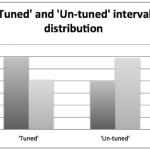
Abstract: Drawing on the notion of musical intervals, recent studies have demonstrated the use of precise frequency ratios within human vocalisation. Methodologically, these studies have addressed human vocalisation at an individual level. In the present study, we asked whether patterns such as musical intervals can also be found among the voices of people engaging in a conversation as an emerging interpersonal phenomenon. Fifty-six participants were randomly paired and assigned to either a control or a low-trust condition. Frequency ratios were generated by juxtaposing nonlocal fundamental frequency (f0) productions from two people engaged in each given dyadic conversation. Differences were found among conditions, both in terms of interval distribution and precision. These results support the idea that psychological dispositions modulate the musical intervals generated between participants through mutual real-time vocal accommodation. They also underscore the inter-domain use of musical intervals.
- Bodily Synchronization and Ecological Validity: A Relevant Concern for Nonlinear Dynamical Systems Theory

Authors: Roberto Musa, David Carré, Carlos Cornejo
Abstract: In their recent article “Bodily synchronization underlying joke telling,” Schmidt et al. (2014) argue that two-person neuroscience is an insufficient approach to explain interpersonal coordination. Interpersonal entrainment, they claim, must be understood bearing in mind that the whole person is embedded in an embodied and social situation. To this effect, they present novel motion-capture data on bodily coordination during a knock-knock joke telling task. Schmidt et al. (2014) make a valid point in calling attention to the complexity of synchronization activity. Precisely because of its importance, however, we believe it is necessary to highlight methodological and substantive caveats that render their work ultimately unsuccessful in accounting for human coordination in natural social interactions.
- Musical improvisation enhances interpersonal coordination in subsequentconversation: Motor and speech evidence
Authors: Juan Pablo Robledo, Sarah Hawkins, Carlos Cornejo, Ian Cross, Daniel Party, Esteban Hurtado
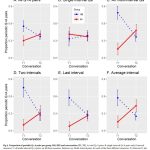
Abstract: This study explored the effects of musical improvisation between dyads of same-sex strangers on subsequent behavioural alignment. Participants–all non-musicians–conversed before and after either improvising music together (Musical Improvisation—MI—group) or doing a motoric non-rhythmic cooperative task (building a tower together using wooden blocks; the Hands-Busy—HB—group). Conversations were free, but initially guided by an adaptation of the Fast Friends Questionnaire for inducing talk among students who are strangers and meeting for the first time. Throughout, participants’ motion was recorded with an optical motion-capture system (Mocap) and analysed in terms of speed cross-correlations. Their conversations were also recorded on separate channels using headset microphones and were analysed in terms of the periodicity displayed by rhythmic peaks in the turn transitions across question and answer pairs (Q+A pairs). Compared with their first conversations, the MI group in the second conversations showed: (a) a very rapid, partially simultaneous anatomical coordination between 0 and 0.4 s; (b) delayed mirror motoric coordination between 0.8 and 1.5 s; and (c) a higher proportion of Periodic Q+A pairs. In contrast, the HB group’s motoric coordination changed slightly in timing but not in degree of coordination between the first and second conversations, and there was no significant change in the proportion of periodic Q+A pairs they produced. These results show a convergent effect of prior musical interaction on joint body movement and use of shared periodicity across speech turn-transitions in conversations, suggesting that interaction in music and speech may be mediated by common processes.
- Interpersonal coordination in three-year-old children: Functions, morphology, and temporality
Authors: Zamara Cuadros, David Carré, Esteban Hurtado, Carlos Cornejo.
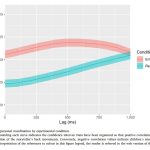
Abstract: The temporal dimension of interpersonal macro- and micro-coordinations between young children and social partners, as well as its functions, has been well documented. However, the different morphologies that bodily micro-coordination can adopt during these interactions have received considerably less attention. This research studied the temporality and morphology of spontaneous child-adult micro-coordinations and their associated functions. For this purpose, three-year-old children (N = 35) were randomly assigned to storytelling sessions based on emotional or referential stories. Using motion capture technology, we traced rapid and spontaneous coordinations between torso movements, ranging from 0 to 1000 milliseconds. Results show that both mirror-like and anatomical coordinations spontaneously emerge in interactions between 3-year-old children and unfamiliar adults. Importantly, slightly delayed in time, mirror-like coordinations predominantly occur in emotional interactions, while zero-lag, anatomical coordinations occur in referential interactions. These results suggest that these morphologies might indeed inform different functions of coordination, as previously theorized in the literature. The evidence found could contribute to a better understanding of how interpersonal coordination shapes social interaction very early in development.